
Pet Problems During Rainy Season Key Takeaways
Rainy season brings a host of health challenges for dogs and cats, from skin infections to respiratory issues and increased anxiety.
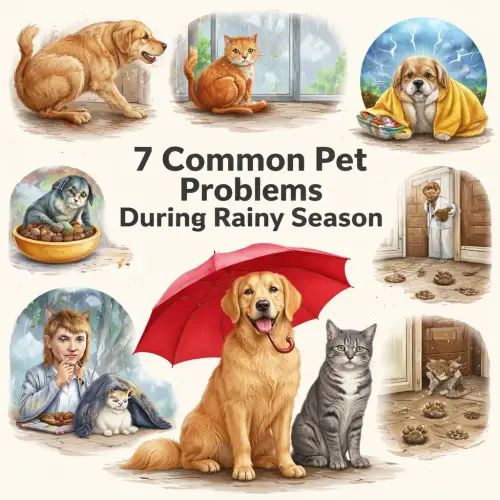
Why Pet Problems During Rainy Season Increase Dramatically
Many pet problems during rainy season happen because wet, humid conditions create the perfect environment for bacteria, fungi, and parasites to thrive. Muddy surfaces, standing water, damp fur, and sudden temperature changes can all affect your pet’s health and comfort.
Rainy days also often mean less outdoor exercise and more stress from loud storms or disrupted routines, which can contribute to behavioral and health issues. Because of this, pet problems during rainy season tend to increase significantly if preventive care is overlooked.
Quick Tip: After every walk, check your pet’s paws, ears, and skin for redness, unusual odor, moisture buildup, or itching. Catching these early warning signs is one of the best ways to prevent common pet problems during rainy season from becoming serious infections.
1. Skin Infections and Hot Spots Caused by Humidity and Rain
One of the most common pet problems during rainy season is skin irritation caused by constant moisture and humidity. Damp fur and wet skin create the perfect environment for bacteria and yeast to multiply, especially in pets with thick coats, skin folds, or underlying allergies.
How Moisture Damages Your Pet’s Skin
When your pet’s coat stays wet for long periods, the skin’s protective barrier weakens. This allows bacteria such as Staphylococcus and yeast like Malassezia to grow rapidly, leading to hot spots, redness, itching, hair loss, and unpleasant odors.
Pets most at risk include:
- Long-haired breeds
- Dogs with skin folds like Bulldogs or Shar-Peis
- Pets with allergies or sensitive skin
- Outdoor pets frequently exposed to rain
These infections are among the most frequent pet problems during rainy season, especially in humid environments.
Prevention and Early Treatment
- Dry your pet thoroughly after walks: Focus on paws, belly, armpits, and ears using a towel or low-heat pet dryer.
- Use pet-safe wipes: Antifungal or antibacterial wipes can help if your pet is prone to skin infections.
- Keep gear dry: Remove wet collars or harnesses promptly, and consider a breathable raincoat for short-haired dogs.
- Monitor the skin daily: Watch for licking, scratching, red patches, hair loss, or a musty smell.
Catching these signs early is one of the best ways to prevent serious pet problems during rainy season before they require intensive treatment.
2. Paw Infections and Mud-Related Issues
Among the most overlooked pet problems during rainy season are paw infections caused by mud, standing water, and trapped moisture. Dirt and bacteria easily collect between paw pads and around nails, especially after rainy walks.
Common Paw Problems in Wet Weather
Wet conditions can lead to:
- Interdigital cysts (painful bumps between the toes)
- Cracked or irritated paw pads
- Bacterial or fungal infections of the paw skin
- Excessive licking or limping
Puddles may also contain chemical runoff, fertilizers, or harmful bacteria such as leptospira, increasing the risk of illness if absorbed through cuts or ingested during grooming. These are serious pet problems during rainy season that can worsen quickly if ignored.
Daily Paw Care Routine
- Rinse and dry paws after every walk: Use plain water or a gentle, vet-approved paw cleanser.
- Trim fur between the toes: This helps prevent mud buildup and trapped moisture.
- Apply protective paw balm: Antibacterial balms can help shield sensitive skin.
- Inspect paws daily: Check between pads and around nails for redness, swelling, cuts, or unusual odor.
Consistent paw care is one of the simplest ways to prevent painful pet problems during rainy season and keep your pet comfortable during wet weather.
3. Respiratory Problems in Pets During Cold and Damp Weather
Respiratory illness is one of the more serious pet problems during rainy season, especially when cold, damp air and reduced ventilation create ideal conditions for germs to spread. Both dogs and cats can develop respiratory irritation or infections during prolonged wet weather.
Signs of Respiratory Infections
Common symptoms include:
- Dry or honking cough
- Sneezing
- Nasal discharge
- Watery eyes
- Low energy or reduced appetite
Cats may also develop conjunctivitis or mouth ulcers. Puppies, kittens, senior pets, and flat-faced breeds are especially vulnerable to these pet problems during rainy season because their respiratory systems are more sensitive.
Prevention Steps
- Keep vaccinations updated: Especially Bordetella and canine influenza vaccines for dogs.
- Limit exposure during severe weather: Shorten walks during heavy rain or cold winds and replace them with indoor enrichment activities.
- Improve indoor air quality: Maintain good airflow without exposing pets to cold drafts. A humidifier may help if indoor air becomes too dry.
- Monitor symptoms early: If one pet becomes sick, separate them from other animals and watch closely for worsening signs.
Persistent coughing, breathing difficulty, or appetite loss should always be evaluated by a veterinarian. Quick action can prevent minor respiratory irritation from becoming one of the more dangerous pet problems during rainy season.
4. Increased Flea and Tick Activity During Rainy Season
One of the most persistent pet problems during rainy season is the rise in flea and tick infestations. Humid conditions help these parasites thrive, and contrary to popular belief, rain doesn’t eliminate them—it actually supports their life cycle by providing the moisture flea eggs and larvae need to survive.
Why Fleas and Ticks Get Worse During Wet Weather
Flea populations can grow rapidly during humid months, while ticks become more active in damp grass, gardens, and wooded areas. Beyond causing itching and irritation, these parasites can spread serious illnesses such as tapeworms, Lyme disease, ehrlichiosis, and anaplasmosis.
Outdoor pets, especially dogs and roaming cats, are particularly vulnerable to these pet problems during rainy season because they’re more exposed to wet environments where parasites hide.
Effective Prevention and Control
- Use flea and tick prevention year-round: Oral or topical preventatives remain essential even outside peak seasons.
- Inspect your pet after walks: Focus on the head, ears, neck, paws, underarms, and groin area.
- Remove ticks promptly: Use fine-tipped tweezers and remove the tick carefully to reduce disease risk.
- Treat the environment: Use vet-approved home and yard treatments to interrupt the flea life cycle.
- Bathe only when needed: Mild flea shampoos can help during active infestations, but excessive bathing may dry out the skin.
Consistent prevention is one of the best ways to avoid serious pet problems during rainy season and keep your pet comfortable, healthy, and itch-free.
5. Reduced Exercise and Weight Gain During Rainy Season
Reduced activity is one of the most overlooked pet problems during rainy season, especially for energetic dogs and indoor pets. When walks are canceled for days because of rain, many pets experience boredom, frustration, and gradual weight gain.
Consequences of Inactivity
Without enough physical and mental stimulation, pets may develop:
- Destructive behaviors like chewing, barking, or scratching
- Weight gain and obesity
- Joint stiffness, especially in senior pets
- Anxiety, restlessness, or low mood
High-energy breeds such as Border Collies, Huskies, and Labradors are particularly affected by these pet problems during rainy season because they rely heavily on daily activity to stay balanced and calm.
Indoor Activities for Rainy Days
Keeping pets active indoors helps prevent both boredom and health issues:
- Puzzle toys and treat dispensers: Freeze peanut butter or wet food inside a Kong for longer-lasting enrichment.
- Indoor fetch or obstacle courses: Use soft toys, cushions, tunnels, or household objects for movement and play.
- Short training sessions: Teaching tricks like sit, stay, or paw shake provides excellent mental exercise.
- Treadmill walking for dogs: With supervision, this can provide controlled indoor cardio.
- Cat enrichment: Laser pointers, wand toys, climbing trees, and chasing games help indoor cats burn energy safely.
Staying proactive with indoor enrichment is one of the best ways to manage pet problems during rainy season while supporting your pet’s physical and emotional wellbeing.
6. Thunderstorm Anxiety and Stress in Pets
Fear and anxiety are common pet problems during rainy season, especially during frequent thunderstorms. Loud thunder, flashing lightning, pressure changes, and even static electricity can trigger intense stress responses in both dogs and cats.
Recognizing Storm Anxiety
Common signs include:
- Panting or pacing
- Trembling or shaking
- Hiding under furniture or in closets
- Excessive barking or meowing
- Destructive chewing or scratching
- Drooling or loss of bladder control
- Attempts to escape the home
Cats often respond more quietly, hiding for long periods or refusing to come out until the storm passes. These anxiety-related behaviors are among the most emotionally challenging pet problems during rainy season for many owners.
How to Help Your Pet Stay Calm
- Create a safe space: Use a quiet interior room with soft bedding, low lighting, and white noise from a fan or calming music.
- Try anxiety wraps or pressure vests: Gentle pressure can help some pets feel more secure during storms.
- Use calming supplements carefully: Vet-approved options containing L-theanine or chamomile may help mild anxiety. Severe cases may require prescription support.
- Practice gradual desensitization: Play storm sounds quietly while offering treats and praise to build positive associations over time.
- Stay calm and reassuring: Never punish fearful behavior. Gentle attention, play, or simply remaining nearby can provide comfort.
Managing stress proactively is one of the most important ways to reduce emotional pet problems during rainy season and help your pet feel safe during storms.
7. Digestive Upsets and Waterborne Illnesses
Rainy season increases the risk of gastrointestinal issues in pets. Puddles, mud, and flooded areas may contain leptospira bacteria, coliform bacteria, or giardia. Pets that drink from standing water or lick muddy paws are vulnerable.
Common Waterborne Illnesses
Leptospirosis causes fever, vomiting, diarrhea, lethargy, and kidney/liver damage. It is zoonotic (can spread to humans). Giardia leads to soft, foul-smelling diarrhea. Both are more common after heavy rains.
Preventive Measures
- Vaccinate against leptospirosis annually if your dog goes outdoors.
- Prevent access to puddles and flooded areas during walks. Carry fresh water for your pet.
- Wipe paws and wash them thoroughly after every outing to remove bacteria.
- If vomiting or diarrhea occurs, withhold food for 12 hours, then offer a bland diet (boiled chicken and rice). Seek vet care if symptoms persist, blood is present, or your pet becomes lethargic.
How to Prevent Infections in Pets During Rainy Season: A Complete Care Routine
How to prevent infections in pets during rainy season is a question every pet owner asks. Combining proactive grooming, environmental management, and health monitoring makes a big difference. The table below summarizes daily, weekly, and monthly actions. For a related guide, see 10 Shocking Pet Care Mistakes Most Owners Make.
| Frequency | Action | Benefit |
|---|---|---|
| Daily | Dry paws, coat, and ears after walks | Prevents skin infections and hot spots |
| Daily | Inspect for ticks and fleas | Early detection reduces disease risk |
| Weekly | Groom with a brush to remove dead fur and mud | Keeps coat dry and reduces matting |
| Weekly | Wash pet bedding in hot water | Eliminates flea eggs and allergens |
| Monthly | Administer flea/tick prevention | Continuous protection against parasites |
| Monthly | Check weight and adjust diet for reduced exercise | Prevents obesity and related health issues |
Grooming Tips for Pets During Rainy Season
Grooming tips pets rainy season emphasize cleanliness without over-bathing. Over-bathing strips natural oils and can worsen skin problems.
- Brush your pet daily to remove dirt and mats. Matted fur holds moisture against the skin.
- Use a pet-safe deodorizing spray between baths to keep your pet fresh.
- Trim long hair around paws, sanitary areas, and ears to reduce mud and moisture retention.
- Clean ears gently with a vet-recommended ear cleaner once a week to prevent yeast infections.
- Regular nail trims (every 2–3 weeks) prevent mud from packing under nails and reduce slipping on wet floors.
Signs of Illness in Pets During Rainy Season: When to Worry
Recognizing early warning signs is essential when dealing with pet problems during rainy season. Wet weather can worsen infections, allergies, parasites, and stress-related conditions, so even subtle changes in behavior or health should be taken seriously.
Watch closely for these signs:
- Persistent coughing or sneezing
- Lethargy or hiding more than usual
- Loss of appetite or refusal to drink water
- Vomiting or diarrhea lasting longer than 24 hours
- Limping, paw licking, or frequent head shaking
- Red, swollen, irritated, or foul-smelling skin patches
- Increased thirst or noticeable changes in urination
If you notice several symptoms together or if any symptom suddenly worsens—contact your veterinarian promptly. Early treatment can prevent minor pet problems during rainy season from developing into more serious health complications.mbination of these, contact your veterinarian. Early intervention improves outcomes and reduces treatment costs.
How to Boost Pet Immunity During Seasonal Changes
Boost pet immunity seasonal changes with these strategies:
- Provide a balanced diet rich in omega-3 fatty acids (fish oil, flaxseed) to support skin and coat health.
- Add probiotics (vet-recommended) to strengthen gut health, which is linked to overall immunity.
- Keep your pet hydrated with clean, fresh water at all times.
- Maintain consistent sleep and exercise routines even indoors, as stress weakens immunity.
- Discuss a multivitamin or supplement with your vet, especially for seniors or pets with chronic conditions.
Rainy Season Pet Care Checklist
Use this rainy season pet care checklist to stay organized:
- Dry and inspect paws, skin, and ears after each walk
- Keep extra towels and a pet raincoat by the door
- Reapply flea/tick prevention on schedule
- Set up indoor enrichment toys for exercise
- Create a calm storm-safe space for anxious pets
- Provide fresh water to discourage puddle drinking
- Wash bedding weekly
- Monitor weight and adjust food portions
- Schedule a pre-rainy-season vet check-up
- Have a vet emergency number saved on your phone
Rainy Season Pet Care Checklist (Printable Summary)
| Category | Action | Frequency |
|---|---|---|
| Health | Vet check-up + vaccinations | Before rainy season |
| Grooming | Brush, trim, dry | Daily after walks |
| Parasites | Flea/tick prevention | Monthly |
| Exercise | Indoor games, puzzle toys | Daily |
| Anxiety | Safe space, calming aids | As needed during storms |
| Diet | Adjust portions, add supplements | Weekly review |
When to Take Your Pet to the Vet During Rainy Weather
Knowing vet visit rainy weather timing can save your pet’s life. Seek immediate veterinary care if you observe:
- Difficulty breathing or constant coughing
- Vomiting or diarrhea with blood
- Seizures or collapse
- Severe trauma (hit by a car, fall)
- Ingestion of poisonous substances (antifreeze, fertilizer, moldy food)
- High fever (above 103°F for dogs, 102.5°F for cats)
- Sudden lethargy and inability to stand
For non-emergency issues like mild coughing, skin redness, or occasional vomiting, call your vet for guidance. Many clinics offer telemedicine consultations for quick advice.
Useful Resources
- AKC: Rainy Season Pet Care Tips—A comprehensive guide from the American Kennel Club covering skin care, paw health, and exercise alternatives.
- VCA Hospitals: Caring for Your Pet’s Skin and Coat in Wet Weather—Veterinary advice on preventing dermatitis, hot spots, and infections during humid months.
Frequently Asked Questions About Pet Problems During Rainy Season
What are common pet problems during rainy season ?
The most common pet problems during rainy season are caused by increased humidity, muddy environments, parasites, and changes in routine. These issues can affect both your pet’s physical and emotional health.
Common rainy season problems include:
- Skin infections and hot spots caused by trapped moisture
- Paw infections from mud, bacteria, and damp surfaces
- Respiratory illnesses triggered by cold, humid weather
- Fleas and ticks, which thrive in moist environments
- Digestive problems from contaminated water or spoiled food
- Thunderstorm anxiety and stress-related behaviors
- Reduced exercise and weight gain due to less outdoor activity
Recognizing these early is important because many pet problems during rainy season can worsen quickly if left untreated. Regular grooming, dryinng, grooming, parasite prevention, and indoor enrichment can help keep pets healthy and comfortable during wet months.
How does rainy weather affect pets health?
Many pet problems during rainy season happen because constant moisture and humidity create ideal conditions for bacteria, fungi, and parasites to thrive. Wet fur and damp skin weaken the skin’s protective barrier, making infections and irritation much more likely.
Rainy weather can also:
- Increase flea and tick activity
- Trigger respiratory irritation from cold, damp air
- Cause muddy paw infections and skin inflammation
- Reduce exercise, leading to boredom and weight gain
- Increase stress and anxiety during thunderstorms
Storms and disrupted routines can also affect your pet emotionally. Loud thunder, reduced outdoor time, and changes in activity levels may lead to fear, clinginess, destructive behavior, or hiding.
Understanding how weather impacts your pet is important because many pet problems during rainy season begin with small changes that worsen if ignored. Regular drying, grooming, parasite prevention, and indoor enrichment can help keep pets healthy and comfortable during wet months.
Why do pets get sick more during rainy season?
Many pet problems during rainy season become more common because damp, humid environments allow bacteria, fungi, and parasites to multiply rapidly. Wet fur, muddy paws, and standing water expose pets to harmful microorganisms that can easily cause infections.
Rainwater and puddles may also contain dangerous bacteria like leptospira, which can spread serious illness through contaminated water or cuts on the skin. At the same time, fleas, ticks, and other parasites reproduce faster in humid weather, increasing the risk of skin irritation and disease transmission.
Rainy weather can also disrupt normal routines. Reduced outdoor activity, less sunlight, and stress from storms may weaken your pet’s physical and emotional resilience over time. These combined factors are why pet problems during rainy season tend to increase significantly during wet months.
What are common illnesses in pets during wet weather?
Several pet problems during rainy season become more common because moisture, mud, and humidity create ideal conditions for infections and parasites. Wet weather can affect your pet’s skin, paws, ears, digestive system, and respiratory health.
Common illnesses include:
- Hot spots and skin infections caused by trapped moisture and bacterial overgrowth
- Pododermatitis (paw infections) from muddy or contaminated surfaces
- Kennel cough and respiratory infections triggered by damp, crowded environments
- Leptospirosis, a bacterial disease spread through contaminated standing water
- Giardia and digestive infections from unsafe water or wet outdoor environments
- Flea and tick infestations, which increase rapidly in humid weather
- Ear infections, especially in dogs with floppy ears or pets exposed to frequent moisture
These conditions are among the most frequent pet problems during rainy season, but many can be prevented through regular grooming, drying after walks, parasite prevention, and early attention to symptoms.
How to prevent infections in pets during rainy season?
Preventing pet problems during rainy season starts with keeping your pet clean, dry, and protected from moisture-related infections and parasites. Small daily habits can greatly reduce the risk of illness during wet weather.
Here are the most effective prevention steps:
- Dry your pet thoroughly after walks: Pay close attention to paws, ears, belly, and skin folds where moisture gets trapped.
- Keep vaccinations current: Especially vaccines that protect against respiratory infections and leptospirosis.
- Use year-round flea and tick prevention: Humid weather increases parasite activity dramatically.
- Provide clean drinking water: Prevent pets from drinking from puddles or standing water outdoors.
- Wash bedding and blankets regularly: Damp fabrics can harbor bacteria and fungi.
- Inspect your pet daily: Look for cuts, redness, swelling, itching, unusual odors, or excessive licking.
Consistent grooming, hygiene, and early detection are the best defenses against common pet problems during rainy season, helping your pet stay healthy and comfortable throughout wet months.
What skin problems in pets caused by humidity and rain?
Several common pet problems during rainy season affect the skin because moisture and humidity weaken the skin barrier and encourage bacterial and fungal growth.
The most common skin issues include:
- Hot spots (moist dermatitis): Painful, red, inflamed patches caused by trapped moisture and excessive licking or scratching
- Yeast infections: Often produce itching, greasy skin, and a strong odor
- Interdigital cysts: Swollen, painful bumps between the toes caused by moisture and irritation
- Ear infections: Especially common in dogs with floppy ears where moisture becomes trapped
Long-haired breeds, pets with thick coats, and dogs with skin folds are especially prone to these pet problems during rainy season because water and humidity stay trapped close to the skin longer.
Regular drying, grooming, paw cleaning, and ear checks are some of the best ways to prevent moisture-related pet problems during rainy season before they become severe.
Do fleas and ticks increase during rainy season in pets?
Yes. One of the most common pet problems during rainy season is the sharp increase in fleas and ticks. Humid conditions help flea eggs and larvae survive and develop faster, while ticks become more active in damp grass, muddy areas, and wooded environments.
These parasites do more than cause itching—they can also spread diseases, trigger allergic reactions, and lead to skin infections. Pets that spend time outdoors are especially vulnerable during wet months.
To reduce these pet problems during rainy season, use year-round flea and tick prevention, inspect your pet after walks, and keep bedding and living areas clean and dry. Consistent prevention is far easier than treating a full infestation later.
How to keep pets dry and clean during rainy days?
Use a pet raincoat, dry paws and body with absorbent towels immediately after walks, trim fur around paws, and brush daily to remove mud and debris.
How to treat pet paw infections and mud related issues?
Clean paws with a gentle antiseptic wash and dry thoroughly. Apply a vet-recommended antibacterial ointment. For persistent swelling or limping, consult your vet.
What are respiratory problems in pets during cold and damp weather?
Kennel cough, canine influenza, bronchitis, and pneumonia. Symptoms include coughing, sneezing, nasal discharge, lethargy, and fever.
How to manage pet anxiety during thunderstorms?
Create a quiet safe room, use white noise, try an anxiety wrap, offer calming treats or medications as recommended by your vet, and never punish fearful behavior.
How to handle reduced exercise problems for pets during rainy season?
Use puzzle toys, play indoor fetch, teach new tricks, set up a mini obstacle course, and use treadmills designed for dogs for aerobic activity.
How to keep indoor pets active during bad weather?
Hide treats around the house, rotate toys, schedule play sessions, use interactive feeders, and consider a cat tree for climbing or a dog treadmill for cardio.
What are signs of illness in pets during rainy season?
Look for coughing, sneezing, diarrhea, vomiting, lethargy, loss of appetite, excessive licking, limping, ear odor, skin redness, paw swelling, and hiding.
How to boost pet immunity during seasonal changes?
Feed a nutritious diet with omega-3s and probiotics, keep up with vaccinations, ensure adequate rest, manage stress, and provide clean water and supplementation as recommended by your vet.
What are the best grooming tips for pets during rainy season?
Brush daily, trim paw fur and long coat, clean ears weekly, use pet-safe wipes for paws, and bathe only when necessary with moisturizing shampoo.
When to take your pet to the vet during rainy weather?
Seek immediate vet care if your pet has difficulty breathing, persistent vomiting/diarrhea, signs of pain, high fever, seizures, or trauma. For mild symptoms, call your vet for advice.
Can I take my dog for a walk in the rain?
Yes, but keep walks short. Use a raincoat, avoid flooded areas and puddles, and dry your dog thoroughly afterward. Skip walks during heavy downpours or lightning.
Is it normal for my cat to sleep more during rainy days?
Yes, many cats sleep more when the weather is dark and rainy. However, watch for lethargy beyond usual sleep patterns, loss of appetite, or hiding, which may indicate illness.
What is a good rainy season pet care checklist ?
Dry and inspect paws daily, maintain parasite prevention, groom regularly, create indoor exercise plans, set up a storm-safe area, provide fresh water, and schedule a vet check-up before storms start.