
Home / 12 Everyday Products That Could Be Dangerous for Pets
Products That Could Be Dangerous Key Takeaways
Your home is filled with everyday products dangerous for pets , from the chocolate bar on the counter to the bottle of floor cleaner under the sink.
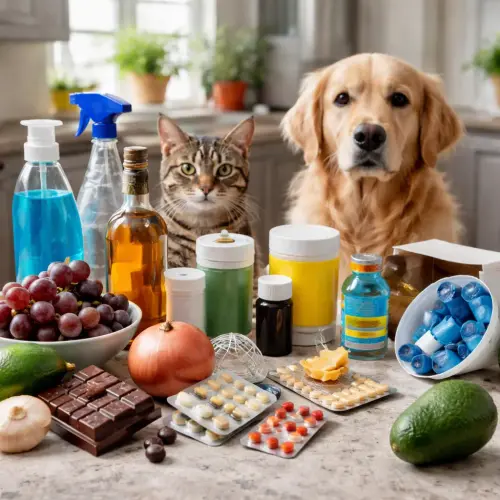
What Are the Most Common Products That Could Be Dangerous?
We all love our furry friends, and most of us try to keep a safe home. But the truth is, many items we use daily can be harmful — even deadly — to our dogs and cats. Let’s walk through 12 of the most common ones and break down exactly why they’re risky.
1. Chocolate and Caffeine
Why chocolate is toxic to pets comes down to two compounds: theobromine and caffeine. Dogs and cats metabolize these very slowly, leading to vomiting, diarrhea, rapid heart rate, seizures, and even death. Dark chocolate and baking chocolate are the most dangerous. Keep all chocolate products, coffee grounds, and tea bags far out of reach.
2. Grapes and Raisins
Even a small handful can cause sudden kidney failure in some dogs. Scientists still aren’t sure why, but the reaction is unpredictable. Never let your pup snack on grapes, raisins, or any trail mix containing them.
3. Xylitol (Sugar-Free Gum and Candy)
This artificial sweetener is extremely toxic to dogs. Common household items toxic to dogs and cats include sugar-free gum, peanut butter brands that use xylitol, and some baked goods. Within 30 minutes, it can cause a dangerous drop in blood sugar and liver failure.
4. Household Bleach and All-Purpose Cleaners
Cleaning agents like bleach, ammonia, and phenols are Products That Could Be Dangerous for pets. When animals walk on freshly cleaned surfaces and lick their paws, they can ingest harmful chemicals. This may lead to mouth burns, drooling, vomiting, or breathing difficulties. Always choose pet-safe cleaners and rinse surfaces thoroughly after use.
5. Essential Oils (Tea Tree, Peppermint, Citrus)
Many people ask, are essential oils dangerous for pets? The answer is yes — especially for cats. Oils like tea tree, peppermint, cinnamon, and citrus can cause liver damage, drooling, and tremors. Even diffusers can be unsafe in enclosed spaces. Keep oils in a locked cabinet and consult your vet before using them around your pet.
6. Over-the-Counter and Prescription Medications
This is a big one. A medications toxic to pets list includes ibuprofen, acetaminophen, antidepressants, and ADHD drugs. Dogs sometimes chew through pill bottles, getting a dose meant for humans. Cats are especially sensitive to acetaminophen, which destroys their red blood cells. Never leave meds on nightstands or open purses.
7. Certain Houseplants and Garden Plants
There are many plants that are poisonous to dogs and cats. Lilies are incredibly dangerous for cats — even a tiny bit of pollen can cause kidney failure. Sago palms, tulip bulbs, azaleas, and oleander are also high-risk. Before adding greenery to your home, cross-check with the ASPCA’s toxic plant list.
8. Liquid Potpourri and Air Fresheners
Are air fresheners and candles safe for pets? Most are not. Liquid potpourri contains essential oils and detergents that can burn a pet’s mouth and cause breathing problems. Plug-in air fresheners release chemicals that irritate sensitive lungs, especially in birds and small mammals. Opt for unscented candles or a regularly cleaned litter box instead.
9. Antifreeze and Windshield Washer Fluid
Can pets get sick from household chemicals like antifreeze? Absolutely. Ethylene glycol has a sweet taste that attracts dogs and cats, but even a teaspoon can cause fatal kidney damage. Look for propylene glycol-based antifreeze, which is safer. Always clean up spills immediately.
10. Pesticides, Insecticides, and Rodent Baits
Products That Could Be Dangerous of pesticides and insecticides for pets include neurological symptoms like twitching, seizures, and drooling. Slug bait (metaldehyde) is particularly dangerous. Rodenticides cause internal bleeding or kidney failure. Use pet-safe options whenever possible and place traps where pets absolutely cannot reach them.
11. Personal Care Products (Sunscreen, Lotion, Makeup)
Personal care products harmful to pets include sunscreens containing zinc oxide, which can cause gastrointestinal upset and anemia. Lotions and makeup with essential oils or certain preservatives are also risky. If you drop a pill or a lip balm, pick it up before your curious cat decides to investigate.
12. Batteries and Coins
Small batteries especially button batteries are Products That Could Be Dangerous because they can cause serious burns in the mouth or stomach if chewed or swallowed. Coins minted after 1982 contain zinc, which can lead to kidney damage. Keep these hidden hazards securely stored in drawers and out of your pet’s reach.
What Human Foods Are Harmful to Pets?
What human foods are harmful to pets goes beyond the big names. Onions and garlic (in any form — raw, cooked, powdered) damage red blood cells in both dogs and cats. Macadamia nuts cause weakness and vomiting. Raw bread dough expands in the stomach and can cause bloat. The safest rule: stick to species-appropriate treats and avoid sharing your plate.
Signs of Poisoning in Pets and What to Do
Recognizing signs of poisoning in pets early can save a life, especially when exposure comes from Products That Could Be Dangerous. Watch for vomiting, diarrhea, drooling, lethargy, tremors, seizures, difficulty breathing, or pale gums.
If you suspect poisoning, remove your pet from the source, call your vet or a pet poison helpline immediately, and do not induce vomiting unless instructed. Acting quickly can make all the difference.
How to Pet Proof Your Home for Safety
Pet-proofing your home for safety starts with a simple walk-through at pet-eye level. Get down low and look for Products That Could Be Dangerous, like loose cords, open cabinets, and small items within reach.
Use childproof locks on cabinets that store cleaners and medications. Keep trash cans sealed with tight lids or tucked away. A few minutes of prevention can save you from serious risks later.
When to Take Your Pet to the Vet After Exposure
When to take your pet to the vet after exposure depends on the substance, but a good rule is: if you’re worried, go. If your pet shows any symptoms, do not wait to see if they get better.
If you know they ingested something toxic but they seem fine, call the vet anyway some effects take hours to appear. Always bring the product container or a sample to help the vet treat faster.
Useful Resources
For more detailed information, check out these trusted sources:
- ASPCA Animal Poison Control Center — Expert database and 24/7 hotline for pet poison emergencies.
- Pet Poison Helpline — A reliable resource for identifying toxins and getting immediate advice.
Final Thoughts: Protecting Your Pet Starts With Awareness
The best defense against an emergency is knowing which Products That Could Be Dangerous are in your home and proactively removing the risk. Start today by scanning your countertops, securing cabinets, and double-checking pet treats. Your pet will thank you with a lifetime of health, safety, and happy moments.
Frequently Asked Questions About Products That Could Be Dangerous
Are grapes really Products That Could Be Dangerous for dogs?
Yes, even small amounts can cause sudden kidney failure. The reaction varies by dog, so it’s safest to avoid grapes and raisins entirely.
Can a tiny bit of chocolate hurt my cat?
Yes, cats are more sensitive to theobromine than dogs. Even a small square of dark chocolate can cause vomiting, restlessness, or worse.
What should I do if my dog eats xylitol gum?
If your dog eats xylitol gum, treat it as one of those Products That Could Be Dangerous call your vet or a pet poison helpline immediately. Xylitol can cause a rapid drop in blood sugar, so fast action is critical.
Is it safe to use vinegar for cleaning around pets?
Diluted white vinegar is generally safe for cleaning, but avoid using it undiluted and keep pets away until surfaces are dry.
Can lavender essential oil hurt my cat?
Yes, lavender oil can cause drooling, vomiting, and liver issues in cats. Diffusers in small rooms can also be problematic.
Which over-the-counter painkiller is most Products That Could Be Dangerous for dogs?
Ibuprofen (Advil, Motrin) is Products That Could Be Dangerous — it can cause stomach ulcers and kidney failure in dogs even at low doses.
Are all lilies dangerous for cats?
Most true lilies (daylily, Easter lily, tiger lily) are extremely toxic to cats, causing kidney failure. Peace lilies cause oral irritation but are less deadly.
Can I use plug-in air fresheners if my pet is in another room?
Using plug-in air fresheners is risky because they are Products That Could Be Dangerous their chemicals can travel through the air, and pets, especially cats and birds, are very sensitive.
How long after ingesting antifreeze do symptoms appear?
Symptoms can show within 30 minutes to a few hours — the pet may seem drunk or wobbly, then become lethargic. Rapid treatment is essential.
Is it okay to use flea and tick collars with other pesticides?
Using multiple Products That Could Be Dangerous, like flea and tick collars with other pesticides, can overload your pet’s system always consult your vet before combining treatments.
Can sunscreen for humans hurt my dog?
Yes, especially if it contains zinc oxide. Even small amounts can cause stomach upset and anemia. Use only pet-formulated sunscreen.
What are the early signs of poisoning in cats?
Early signs of poisoning in cats can include drooling, hiding, loss of appetite, vomiting, and uncoordinated movements. These are often linked to Products That Could Be Dangerous, and since cats hide illness well, it’s important to stay alert.
Should I make my dog vomit if they ate a toxic plant?
No — never induce vomiting unless your vet specifically tells you to. Some plants and chemicals cause more damage when brought back up.
Are macadamia nuts toxic to cats too?
Macadamia nuts are among Products That Could Be Dangerous. Toxicity is mainly documented in dogs, but it’s safest to keep all nuts away from cats as a precaution.
How do I pet proof my kitchen cabinets?
Install childproof locks on lower cabinets. Move all cleaning products, trash, and human food to high or locked storage.
Is it safe to give my dog Benadryl?
Only under vet guidance. The correct dose depends on the dog’s weight, and some formulations contain other ingredients that are harmful.
Can smoking around pets be Products That Could Be Dangerous?
Yes, secondhand and thirdhand smoke (residue on surfaces) is linked to respiratory issues and certain cancers in dogs, cats, and birds.
What should I do if my pet eats a coin?
If your pet eats a coin, treat it as one of those Products That Could Be Dangerous call your vet immediately. Pennies made after 1982 contain zinc, which can cause severe anemia and kidney damage..
Are glow sticks toxic to pets?
They aren’t highly toxic, but the liquid inside can cause drooling, foaming at the mouth, and stomach upset. It’s still best to keep them away.
How can I quickly check if a plant is safe for my pet?
To check if a plant is safe for your pet, use trusted sources like the ASPCA database, as some plants are Products That Could Be Dangerous. You can search by plant name and get reliable safety information in seconds.