
Home / 8 Reasons Your Dog Is Acting Strange (And What to Do)
Reasons Your Dog Is Acting Strange Key Takeaways
Every dog owner has experienced that moment of worry when their normally playful pup suddenly seems distant, restless, or aggressive.
Table of Contents
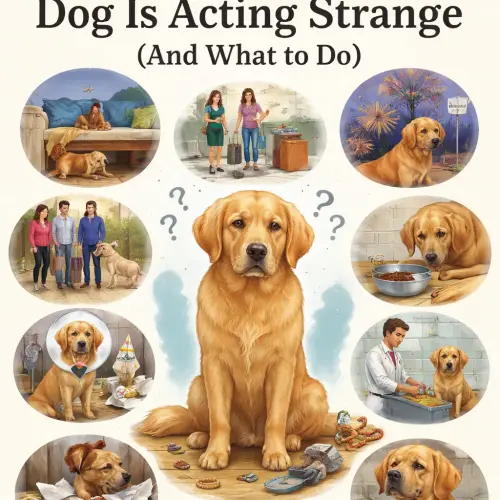
Understanding the Possible Reasons Your Dog Is Acting Strange
Sudden behavior changes can be confusing and worrying for pet owners. But because dogs communicate primarily through behavior, unusual actions are often their way of signaling that something is wrong. Understanding the reasons your dog is acting strange can help you identify problems early and respond appropriately.
Sometimes the cause is minor, like stress or boredom. Other times, behavioral changes may point to pain, illness, anxiety, or environmental changes. That’s why paying attention to even subtle shifts in routine or personality matters.
The good news is that most reasons your dog is acting strange fall into a handful of common categories. Recognizing these patterns can help you decide when simple adjustments are enough—and when it’s time to contact your veterinarian.
1. Pain or Illness That Changes Behavior
One of the most common reasons your dog is acting strange is physical pain or an underlying medical issue. Dogs naturally hide discomfort as a survival instinct, so even small behavioral changes can signal that something is wrong.
Subtle signs such as limping, whining, unusual panting, reduced activity, or avoiding interaction may indicate illness or pain. If your dog suddenly seems “off,” it’s important to watch closely for other symptoms and schedule a veterinary exam when needed.
Common Medical Causes Behind Strange Behavior
- Dental disease: Bad breath, drooling, pawing at the mouth, or reluctance to chew
- Arthritis or joint pain: Stiffness, limping, difficulty standing, or hesitation with stairs
- Urinary tract infections: Frequent urination, accidents indoors, or straining
- Ear infections: Head shaking, scratching at the ears, or balance problems
If you suspect discomfort, keep notes about when the behavior started and any accompanying symptoms. Tracking patterns can help identify the underlying reasons your dog is acting strange and support faster treatment.
2. Stress and Anxiety Triggers
Stress and anxiety are very common reasons your dog is acting strange. Dogs experience emotional stress much like humans do, but instead of speaking about it, they show it through changes in behavior and body language.
Signs of Stress or Anxiety in Dogs
Common symptoms include:
- Pacing or restlessness
- Excessive yawning or drooling
- Panting without exercise
- Trembling or shaking
- Tucked tail or flattened ears
- Avoiding eye contact or hiding
- Loss of appetite despite normally loving food
Sudden environmental changes are often the cause. Thunderstorms, fireworks, visitors, travel, vet appointments, or even shifts in your routine can trigger anxiety-related reasons your dog is acting strange.
How to Help a Stressed Dog
- Create a quiet, safe space with familiar bedding and toys
- Maintain a consistent feeding and walking schedule
- Use calming tools such as pheromone diffusers or anxiety wraps
- Offer gentle reassurance without forcing interaction
- Redirect nervous energy through play or enrichment activities
If anxiety becomes severe or frequent, speak with your veterinarian about behavioral training or medical support. Emotional stress is one of the most common yet overlooked reasons your dog is acting strange, especially when behavior changes happen suddenly.
3. Environmental Changes Affecting Your Dog’s Mood
Changes in the environment are common reasons your dog is acting strange, especially because dogs rely heavily on routine and familiarity to feel safe. Even small disruptions can affect your dog’s mood, confidence, and behavior.
Common Environmental Triggers
Dogs may react to:
- Moving to a new home
- Rearranging furniture
- A new baby or pet in the household
- Changes in work schedules or daily routines
- Loud construction or unfamiliar smells
- New flooring, cleaning products, or detergents
If your dog suddenly starts hiding, avoiding certain rooms, acting clingy, or behaving nervously, consider what recently changed in their environment. Sensitive dogs can respond strongly to even subtle shifts, making environmental stress one of the most overlooked reasons your dog is acting strange.
How to Help Your Dog Adjust
- Reintroduce changes gradually whenever possible
- Use treats, praise, and play to create positive associations
- Keep feeding, walking, and bedtime routines consistent
- Provide familiar bedding, toys, and quiet spaces for comfort
- Give your dog extra patience and reassurance during transitions
Most dogs adapt within a few weeks when supported calmly and consistently. Understanding how routine affects behavior can help you address emotional reasons your dog is acting strange before stress becomes a long-term issue.
4. Cognitive Decline in Senior Dogs
Age-related cognitive changes are another important reason behind the reasons your dog is acting strange, especially in older pets. As dogs age, they can develop Canine Cognitive Dysfunction (CCD), a condition similar to dementia in humans.
Signs of Cognitive Decline
Senior dogs with CCD may show:
- Hiding or avoiding family members
- Staring at walls or corners
- Getting “lost” in familiar spaces
- Sleeping more during the day but pacing at night
- Forgetting house-training habits
- Appearing confused or disoriented
When unusual behavior is combined with lethargy or confusion, age-related decline may be one of the underlying reasons your dog is acting strange. However, similar symptoms can also occur with thyroid disease, hearing loss, vision problems, or pain, which is why a veterinary evaluation is important.
How to Support a Senior Dog
- Maintain a predictable daily routine
- Provide gentle mental enrichment with puzzle toys or scent games
- Use night lights and easy-to-navigate spaces around the home
- Feed veterinarian-recommended diets rich in antioxidants and brain-support nutrients
- Discuss medications or supplements with your veterinarian if symptoms worsen
With proper support, many senior dogs can remain comfortable and engaged for years. Recognizing cognitive decline early helps address one of the more subtle reasons your dog is acting strange before confusion and anxiety increase.
5. Pain-Related Aggression or Withdrawal
Pain is one of the most misunderstood reasons your dog is acting strange, especially when behavior suddenly shifts toward aggression or withdrawal. A normally affectionate dog may growl, snap, hide, or avoid interaction simply because they are trying to protect a painful area.
Signs Pain May Be Affecting Behavior
Watch for:
- Flinching when touched
- Reluctance to jump, climb stairs, or play
- Hunched posture or stiffness
- Sudden hiding or avoiding contact
- Growling during normal handling
- Changes in sleep position or movement
If aggression appears suddenly and feels out of character, pain should be considered one of the first possible reasons your dog is acting strange.
How to Respond Safely
- Do not punish growling or warning behaviors
- Stop the interaction calmly and observe the situation
- Note when and where the behavior happens
- Avoid forcing handling if your dog seems uncomfortable
- Schedule a veterinary examination promptly
A complete medical evaluation—including orthopedic and neurological checks—can help identify hidden pain before behavior worsens. Many dogs improve significantly once the underlying physical cause behind the reasons your dog is acting strange is properly treated.
6. Restlessness and Pacing: Could It Be Pain or Boredom?
Restlessness is one of the more noticeable reasons your dog is acting strange, but the cause can range from simple boredom to serious medical emergencies. Dogs may pace, whine, or struggle to settle when they are uncomfortable, anxious, overstimulated, or lacking enough activity.
Possible Causes of Pacing and Restlessness
Common causes include:
- Boredom or lack of exercise
- Anxiety or stress
- Pain or physical discomfort
- Digestive upset
- Cognitive decline in senior dogs
- Serious conditions like bloat (GDV), especially in large breeds
If your dog is pacing continuously after eating, appears distressed, has a swollen abdomen, or cannot get comfortable, seek emergency veterinary care immediately. These may be dangerous medical reasons your dog is acting strange.
How to Tell Boredom from a Medical Problem
A simple way to evaluate the behavior is to offer:
- A training session
- A favorite toy
- A walk or interactive game
If your dog quickly engages and relaxes afterward, boredom or excess energy may be the cause. However, if pacing continues despite distraction—or your dog refuses food, play, or rest—it may indicate one of the more serious reasons your dog is acting strange, and a veterinary visit is recommended.
Mental enrichment, structured exercise, and consistent routines can help prevent stress-related pacing in healthy dogs.
7. Changes in Appetite or Sleep Patterns
Changes in eating or sleeping habits are common reasons your dog is acting strange, especially when the behavior appears suddenly or lasts more than a day or two. Because appetite and sleep are closely connected to overall health, even subtle shifts can signal physical or emotional problems.
What Appetite Changes Can Mean
A dog that suddenly loses interest in food may be experiencing:
- Dental pain
- Nausea or digestive upset
- Stress or anxiety
- Illness or infection
- Intestinal blockage
On the other hand, increased hunger combined with weight loss may point to parasites, thyroid issues, or metabolic disease. These are important medical reasons your dog is acting strange that should not be ignored.
Sleep Pattern Changes to Watch For
Sleeping much more than usual, pacing at night, or struggling to settle may indicate:
- Pain or discomfort
- Anxiety or cognitive decline
- Hormonal or metabolic conditions
- Lack of mental or physical stimulation
A dog that eats less but drinks significantly more water may be showing signs of kidney disease or diabetes. Monitoring these combined symptoms can help identify the underlying reasons your dog is acting strange before the condition worsens.
If appetite or sleep changes persist for more than 24–48 hours, especially alongside vomiting, lethargy, or unusual behavior, contact your veterinarian for evaluation.
8. Neurological Symptoms and Warning Signs
Neurological issues are among the most serious reasons your dog is acting strange and should never be ignored. Sudden changes involving balance, coordination, awareness, or personality may indicate problems affecting the brain or nervous system.
Warning Signs of Neurological Problems
Seek immediate attention if your dog shows:
- Seizures or collapse
- Head tilting
- Circling repeatedly
- Loss of balance or coordination
- Sudden blindness
- Facial twitching or tremors
- Weakness or paralysis
Less obvious neurological reasons your dog is acting strange may include:
- Forgetting familiar commands
- Walking into walls or furniture
- Sudden fearfulness or aggression
- Confusion in familiar environments
- Unusual staring or disorientation
These symptoms can be linked to conditions such as vestibular disease, inflammation of the brain, toxin exposure, or even brain tumors.
When to Seek Emergency Care
If your dog experiences seizures, collapses, breathing difficulty, or signs of paralysis, seek emergency veterinary care immediately. Even mild neurological changes—such as occasional circling or a subtle head tilt—should be evaluated promptly, since early treatment can greatly improve outcomes.
Because neurological disorders can progress quickly, recognizing these serious reasons your dog is acting strange early is critical for your dog’s safety and long-term health.
How Your Vet Determines the Cause of Strange Behavior
How to tell if your dog needs a vet for behavior changes depends on severity and duration. A general rule: if the behavior lasts more than 24 hours or is accompanied by physical symptoms (vomiting, diarrhea, limping, fever), see a veterinarian.
Your vet will perform a physical exam, run blood work, check urine, and may recommend imaging like X-rays or ultrasound. They’ll ask about your dog’s history, recent changes at home, and the specific timeline of behavior shifts. Be honest and thorough — even minor details matter.
Practical Tips to Help Your Dog Right Now
While waiting for a vet appointment, you can take several steps to support your dog:
- Keep your dog in a quiet, familiar area away from loud noises and busy activity.
- Offer fresh water and a small amount of their usual food. Don’t force eating.
- Use gentle, calm interactions — avoid looming over them or staring directly.
- Provide a soft bed or blanket where they can retreat.
- If safe, a gentle massage may help a tense dog relax.
Useful Resources
For more expert guidance on canine behavior and health, explore these trusted resources:
- American Kennel Club — Dog Behavior Problems and Solutions
- VCA Animal Hospitals — Dog Behavior Problems
Reasons Your Dog Is Acting Strange are rarely a mystery once you know what to look for. Trust your instincts — you know your dog better than anyone. When in doubt, a veterinary visit provides peace of mind and, if needed, early treatment that can make all the difference. Stay patient, stay observant, and your bond with your dog will only grow stronger.
Frequently Asked Questions About Reasons Your Dog Is Acting Strange
Why is my dog acting strange all of a sudden ?
Sudden strange behavior can stem from pain, illness, stress, environmental changes, or fear. Always start with a vet check to rule out medical causes.
What causes sudden behavior changes in dogs ?
Common triggers include injury, infection, anxiety (thunder, fireworks), new family members, schedule changes, and aging-related cognitive decline.
Is my dog sick or just behaving differently ?
If the change is accompanied by physical signs like vomiting, diarrhea, lethargy, or pain, illness is likely. Otherwise, evaluate recent environmental stressors.
What are the most common reasons dogs act unusual or out of character ?
Pain, fear, anxiety, boredom, lack of exercise, dietary issues, and changes in routine are the top reasons dogs behave unusually.
What to do if your dog is acting weird ?
Stay calm, observe other symptoms, remove potential stressors, and contact your veterinarian if the behavior persists or includes signs of illness.
What are signs of stress or anxiety in dogs behavior ?
Excessive panting, pacing, yawning, lip licking, tucked tail, ears back, trembling, hiding, and loss of appetite are classic signs of canine anxiety.
What causes a dog acting aggressive or withdrawn all of a sudden?
Sudden aggression or withdrawal often points to pain, fear, or a medical condition like hypothyroidism or neurological issues. A vet visit is essential.
Sudden lethargy in dogs: what does it mean?
Sudden lethargy can indicate infection, metabolic disease (kidney, liver), anemia, pain, or even heart problems. It warrants prompt veterinary evaluation.
Why is my dog hiding or avoiding people all of a sudden?
Hiding is a common response to pain, fear, stress, or illness. Dogs with cognitive dysfunction (senility) also frequently hide.
What causes changes in appetite or sleep in dogs?
Dental pain, gastrointestinal issues, stress, hormone imbalances, and aging can all disrupt appetite and sleep patterns in dogs.
Could pain or illness cause strange dog behavior ?
Yes, pain and illness are leading causes of unusual behavior. Dogs often act out when they feel unwell, so always consider a medical cause first.
How to tell if your dog needs a vet for behavior changes ?
If the behavior lasts more than 24 hours, includes physical symptoms, or involves aggression, disorientation, or lethargy, see a vet promptly.
Can environmental changes affect dog behavior?
Absolutely. Moving, new furniture, loud construction, a new baby or pet, or changes in your schedule can all cause temporary behavioral shifts.
Why is my dog acting restless or pacing constantly?
Restlessness may result from boredom, lack of exercise, anxiety, pain, or serious conditions like bloat. If your dog can’t settle, check with your vet.
What are neurological symptoms in dogs warning signs ?
Seizures, head tilt, circling, falling, blindness, facial twitching, and sudden behavior changes are red flags requiring immediate veterinary care.
How to calm a dog acting unusual ?
Create a quiet space, use calming pheromones, maintain a consistent routine, provide gentle massage, and avoid forcing interaction.
When should I worry about my dog’s behavior ?
Worry when the behavior includes physical pain signs, lasts more than 24 hours, involves aggression, or includes neurological symptoms like seizures or collapse.
What steps to take if your dog is behaving abnormally ?
Document the behavior and any triggers, remove stressors, check for injuries, contact your vet, and follow their guidance for next steps.
Can a dog’s diet cause sudden behavior changes?
Yes. Food allergies, poor nutrition, or a sudden diet change can cause gastrointestinal upset and irritability, leading to behavior changes.
How long does it take for a dog to adjust to a new environment?
Most dogs begin to settle within two to three weeks, but full adjustment can take up to three months for particularly anxious or sensitive dogs.