
Home / 8 Reasons Your Cat Is Vomiting
reasons your cat is vomiting Key Takeaways
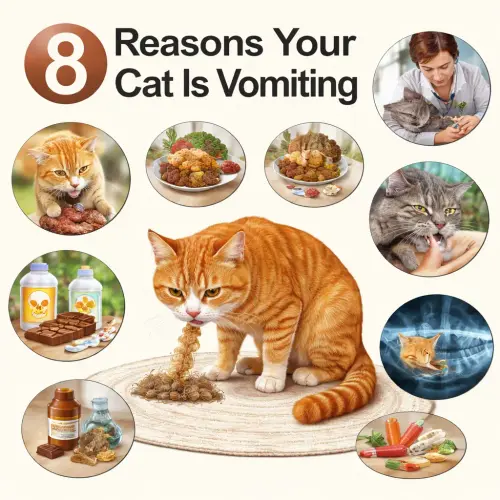
In this article, we’ll walk through eight distinct causes, each with its own set of clues.
- Vomiting occurs for many reasons your cat is vomiting , including diet, stress, and illness.
- Occasional hairball vomiting is normal, but frequent or sudden episodes need attention.
- Knowing when to act — especially if why is my cat vomiting involves yellow bile, blood, or other red flags — can save your cat’s life.
Table of Contents
Understanding the Common Reasons Your Cat Is Vomiting
Before we dive into each reason, it helps to know that cats vomit fairly easily. Their digestive system is sensitive, and triggers range from a small hairball to a sudden dietary change. What causes vomiting in cats often falls into two camps: minor, self-resolving issues or underlying medical conditions. As a cat owner, the most important skill is recognizing which situation you’re facing.
In this article, we’ll walk through eight distinct causes, each with its own set of clues. Pay close attention to when the vomiting happens, what it looks like, and how your cat acts otherwise. Those details are gold for you and your vet.
1. Hairballs — The Classic Culprit
Hairballs are probably the first thing that comes to mind when you ask, is it normal for cats to throw up? The answer is yes — in moderation. When your cat grooms, loose fur gets swallowed and sometimes clumps in the stomach. Eventually, the body rejects it as a tubular, wet mass of hair mixed with a little bile or saliva.
How to Tell It’s a Hairball
- Your cat coughs or hacks before throwing up firm, fur-covered mucus.
- The vomiting is occasional — once a week or less.
- Your cat is otherwise playful, eating, and drinking normally.
If you see a hairball once or twice a month, it’s nothing to panic about. However, if your cat is retching repeatedly with no hair coming up, that could signal a blockage. In that case, when should I take my cat to the vet for vomiting? If the retching goes on more than 24 hours or your cat stops eating, make the call.
2. Eating Too Fast or Too Much
You love watching your cat enjoy dinner, but if they inhale it like a vacuum, vomiting often follows. Cat vomiting after eating causes often point to speed eating. The stomach stretches too quickly, and the body says, “Nope — send that back.”
Symptoms of Speed-Eating Vomiting
- Undigested food appears within 5–15 minutes of finishing the meal.
- The vomit looks like whole kibble or shredded chunks, often coated in saliva.
- Your cat rushes to eat again right after throwing up.
This is a common common reasons cats vomit food or bile scenario. The fix is easy: use a slow feeder bowl or scatter food on a flat tray. Smaller, more frequent meals also help. If the pattern keeps happening despite slower feeding, check with your vet to rule out an esophageal issue.
3. Dietary Indiscretion — Eating Something They Shouldn’t
Cats are curious. They nibble on houseplants, lick plastic bags, steal a piece of cheese off the counter, or even pounce on an insect. Any of those can upset the stomach. Sudden vomiting in cats what does it mean when it comes right after they snuck a bite of something unusual? Usually, it’s a self-protective reflex.
When It’s a Problem
One episode of vomiting after eating a non-food item is rarely dangerous. But if your cat eats something truly toxic — like a lily leaf, raisins, or a piece of string — the situation changes. Toxic substances that make cats vomit include many common household plants, human medications, and even certain essential oils. If you suspect poisoning, don’t wait. Call your vet or a pet poison hotline immediately.
4. Food Allergies or Sensitivities
Just like people, cats can develop allergies to specific proteins or grains. Food allergies causing vomiting in cats tend to show up as chronic, low-grade symptoms rather than sudden attacks. You might see vomiting every few days, along with itchy skin or excessive ear wax.
Identifying a Food Allergy
- Vomiting happens an hour or two after eating.
- The vomit looks like partially digested food mixed with yellow bile.
- Your cat also scratches more than usual or has recurrent ear infections.
If you suspect a food allergy, talk to your vet about a novel protein or hydrolyzed diet trial. It typically takes 8–12 weeks to see improvement. This is another instance where when should I take my cat to the vet for vomiting becomes clear: if the problem is chronic and doesn’t go away with dietary changes, professional guidance is essential.
5. Infections or Parasites
Bacteria, viruses, and internal parasites can all inflame your cat’s digestive tract. Infections or parasites causing cat vomiting often come with other symptoms: diarrhea, lethargy, loss of appetite, or a fever. Kittens and outdoor cats are especially vulnerable.
Signs to Watch For
If your cat vomits and also has loose stools, a dull coat, or seems unusually tired, parasites like roundworms or protozoa like giardia could be the culprit. Older cats with weaker immune systems may also develop bacterial infections that cause sudden vomiting. A fecal test at the vet can quickly identify the problem. Treatment is usually straightforward with dewormers or antibiotics.
6. Systemic Illnesses (Kidney Disease, Hyperthyroidism, Pancreatitis)
Some of the most serious reasons your cat is vomiting have nothing to do with the stomach at all. Chronic conditions like kidney disease, hyperthyroidism, or pancreatitis often list vomiting as a key symptom. These are more common in senior cats but can occur at any age.
Clues It’s a Systemic Issue
- Vomiting is frequent and not linked to a specific meal or hairball.
- Your cat is drinking and urinating more than usual (kidney disease).
- Your cat has lost weight despite a ravenous appetite (hyperthyroidism).
- Your cat is lethargic, dehydrated, and shows a hunched posture (pancreatitis).
Any of these signs means you need a veterinary workup. Blood work and urine tests can uncover the underlying problem. Early detection gives you more treatment options and a better outcome.
7. Stress and Anxiety
Cats are creatures of habit. A new pet, a move, a baby, or even rearranging the furniture can trigger anxiety. Stress related vomiting in cats signs often go unnoticed because we blame the food or hairballs first. But stress messes with the gut directly.
How Stress Vomiting Looks
- Your cat vomits intermittently during the stressful period.
- The vomit is often yellow bile, especially if your cat skips meals due to anxiety.
- Your cat hides, over-grooms, or becomes aggressive alongside the vomiting.
Reducing stress is key. Offer hiding spots, use calming pheromone diffusers, and keep routines as consistent as possible. If the vomiting continues despite a calmer environment, it’s time to rule out physical causes with your vet.
8. Ingestion of Toxic Substances
This one deserves its own spot because it’s an emergency. Toxic substances that make cats vomit include lilies, antifreeze, human medications like acetaminophen, and certain essential oils. Even a small amount can be deadly.
Emergency Red Flags
- Sudden, severe vomiting that repeats rapidly.
- You see or suspect your cat ate something toxic.
- Your cat is drooling, wobbly, having a seizure, or collapsing.
If you spot any of those signs, you are past the point of asking, is it normal for cats to throw up. Get to a vet or emergency animal hospital right now. Time is critical with poisonings.
When to Worry: Warning Signs Serious Illness Cat Vomiting
Now that you know the eight main reasons your cat is vomiting, let’s talk about the red flags that should never wait. You don’t need to memorize every possible disease — just know these urgent signs.
Call Your Vet Immediately If You Notice:
- Vomiting more than 3 times in 24 hours.
- Blood in the vomit (bright red or dark, like coffee grounds).
- Your cat is lethargic, hiding, or refusing to move.
- Your cat hasn’t eaten or drunk anything in 12 hours.
- Your cat has a distended or painful belly.
- Your cat is a kitten, senior, or has a known health condition.
These are classic warning signs serious illness cat vomiting moments. When in doubt, err on the side of caution. Vets would rather see a false alarm than a preventable tragedy.
How to Treat Mild Vomiting in Cats at Home
If your cat is acting normally and the vomiting is clearly tied to a hairball or a one-time dietary slip, you can often manage it at home. How to treat mild vomiting in cats at home starts with patience and observation. For a related guide, see 8 Reasons Your Dog Is Acting Strange (And What to Do).
Home Care Steps:
- Withhold food for 12 hours, but always provide fresh water.
- After the fast, offer a small amount of bland food — boiled chicken breast (no skin, no bones) or a prescription gastrointestinal diet works well.
- Feed tiny portions every 3–4 hours for the first day.
- Gradually mix in their regular food over 2–3 days.
Also, think about what to feed a cat after vomiting. Stick to something easily digestible. Avoid dairy, fatty foods, and anything new. If the vomiting stops, you’re in the clear. If it returns, that’s your cue to call the vet.
Watch for Dehydration
Dehydration risk from vomiting in cats is real, especially in small cats or those who vomit repeatedly. Check for dehydration by gently pulling up the skin at the back of the neck. If it snaps back slowly, your cat is dehydrated. In that case, do not wait — your cat needs fluids from a vet, not just home care.
Useful Resources
These external sources offer deeper guidance on cat vomiting and related health topics. They are vetted by veterinary professionals and well respected in the pet community.
- VCA Animal Hospitals: Vomiting in Cats — A thorough overview of causes and when to seek veterinary care.
- PetMD: Vomiting in Cats — Causes and Treatment — Detailed information on different types of vomiting and recommended treatments.
Frequently Asked Questions About Reasons Your Cat Is Vomiting
Disclaimer: This content is for informational purposes only and does not replace professional veterinary advice. If your cat is vomiting or showing signs of illness, please consult a licensed veterinarian.
Frequently Asked Questions About reasons your cat is vomiting
Why is my cat vomiting ?
Your cat may vomit from hairballs, eating too fast, food allergies, infections, parasites, stress, or serious illnesses like kidney disease. The specific reason depends on the timing, appearance of the vomit, and your cat’s other behaviors.
What causes vomiting in cats ?
Causes range from benign (hairballs, diet change) to serious (organ disease, poisoning). Common triggers include dietary indiscretion, food sensitivities, gastrointestinal infections, and systemic conditions like hyperthyroidism or pancreatitis.
Is it normal for cats to throw up ?
Occasional vomiting — once or twice a month, especially with a hairball — is considered normal for many cats. However, frequent or progressive vomiting is not normal and should be investigated by a vet.
How often is too often for a cat to vomit ?
Vomiting more than once a week, or more than three times in 24 hours, is too often. Any increase in frequency from your cat’s usual pattern is a reason to consult your vet.
When should I take my cat to the vet for vomiting ?
See a vet if vomiting persists for more than 24 hours, if your cat is lethargic, if there is blood in the vomit, if your cat stops eating or drinking, or if you suspect poisoning or a foreign body.
What are common reasons cats vomit food or bile ?
Vomiting undigested food often means eating too fast or a food allergy. Yellow bile usually indicates an empty stomach — common in cats who skip meals, are stressed, or have reflux.
How can I tell hairballs vs illness in cats vomiting ?
Hairballs are usually firm, tubular shapes covered in slime. Illness vomiting is often liquid, bile‑colored, or frothy, and may be accompanied by other symptoms like diarrhea, lethargy, or loss of appetite.
What are cat vomiting after eating causes ?
Eating too quickly, food allergies, a sudden diet change, or an esophageal disorder can all cause vomiting right after a meal. If you’ve already slowed feedings, a vet check is wise.
Sudden vomiting in cats what does it mean ?
Sudden vomiting can mean a dietary indiscretion (eating something bad), food poisoning, pancreatitis, or ingestion of a toxic substance. If it’s acute and severe, treat it as an emergency.
What does cat throwing up yellow liquid mean?
Yellow liquid is bile, which means your cat’s stomach is empty. It can happen from an empty stomach, eating too many fatty meals, or conditions like pancreatitis or inflammatory bowel disease.
Can food allergies cause vomiting in cats?
Yes. Food allergies are a common cause of chronic vomiting in cats. Affected cats often vomit partially digested food an hour or two after eating and may also have itchy skin or ear infections.
Do infections or parasites cause vomiting in cats?
Yes. Bacterial infections, viral infections (like panleukopenia), and intestinal parasites (like roundworms or giardia) can all cause vomiting, often together with diarrhea and lethargy.
Which toxic substances make cats vomit?
Common toxins include lily plants, antifreeze, human pain relievers (ibuprofen, acetaminophen), certain essential oils, and cleaning chemicals. Even a small amount can be dangerous.
What are stress related vomiting in cats signs ?
Stress related vomiting is often yellow bile and happens when your cat is anxious due to changes in the home, new pets, or routine disruptions. Look for hiding, over‑grooming, and decreased appetite.
How to treat mild vomiting in cats at home ?
Withhold food for 12 hours, then offer small amounts of bland food like boiled chicken. Keep fresh water available and monitor for dehydration. If vomiting continues, seek veterinary attention.
What to feed a cat after vomiting ?
Feed a bland, low‑fat diet: boiled skinless chicken, plain pumpkin puree, or a veterinary gastrointestinal recovery diet. Avoid treats, dairy, and table scraps for several days.
How serious is dehydration risk from vomiting in cats ?
Dehydration can happen quickly, especially in kittens and small cats. Signs include sunken eyes, lethargy, dry gums, and skin that doesn’t snap back when pinched. Severe dehydration requires immediate veterinary fluids.
What are warning signs of serious illness in a vomiting cat?
Blood in vomit, more than three episodes in 24 hours, lethargy, refusal to eat or drink, a painful belly, and underlying health conditions are all red flags that need immediate medical attention.
Can a kitten vomit from something minor?
Yes, kittens vomit from overeating, eating too fast, or minor stomach upsets. But because kittens dehydrate quickly, any vomiting that lasts more than 12 hours warrants a vet check.
What should I do if my cat vomits and acts normal?
If your cat vomits once and then acts completely normal — eating, playing, drinking — it’s usually fine. Just watch for a second episode and consider it a one‑time event unless it repeats.