
Reasons Your Cat Is Meowing Too Much Key Takeaways
When your cat suddenly turns into a vocal superstar, it’s easy to wonder if something is wrong — or if they just want more attention.
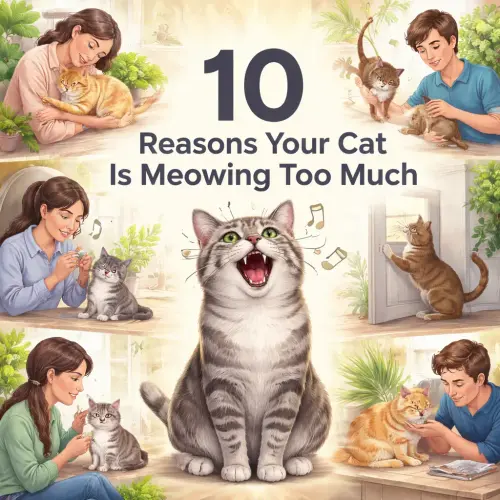
Understanding the Real Reasons Your Cat Is Meowing Too Much
Before you can fix a noisy cat, you need to decode the message. Feline vocalizations vary widely — from a soft chirp to an urgent yowl. While some breeds (like Siamese) are naturally talkative, a sudden increase in meowing deserves your attention. Let’s walk through the ten most common triggers. For a related guide, see 8 Reasons Your Cat Is Vomiting.
1. They’re Trying to Tell You Something Medical
A cat that won’t stop meowing might be in pain. Conditions like hyperthyroidism, kidney disease, arthritis, and dental problems can all cause excessive vocalizing. If your cat is meowing more than usual and also hiding, not eating, or using the litter box outside the box, schedule a vet visit first. Never assume it’s just “being dramatic.” For a related guide, see 7 Warning Signs Your Cat Might Be in Pain.
2. Hunger or Thirst — but Not the Bowl You Think
One of the common reasons your cat is meowing is hunger or thirst—but not always in the obvious way. Sometimes your cat vocalizes because the food bowl is empty, even if you’ve just filled it. Other times, the cat meowing too much may mean they want a different texture, temperature, or flavor.
Dehydration can also be a cause, as cats are very particular about fresh water. Make sure their water source is clean and flowing. Paying attention to these details can help you better understand the subtle reasons your cat is meowing.
3. Attention-Seeking Behavior
One of the common reasons your cat is meowing is attention-seeking behavior. If every time your cat meows you respond with a treat, petting, or eye contact, they quickly learn that vocalizing gets your attention. Over time, this reinforces the habit.
Cats are smart, and sometimes the main reason your cat is meowing too much is simply “I want your focus now.” The solution is to avoid rewarding the meowing and instead give attention during quiet moments. It may feel a bit harsh at first, but your cat will learn faster than you expect.
4. Boredom and Lack of Stimulation
Another common reason your cat is vocalizing is boredom. One of the key reasons your cat is meowing is simply a lack of mental and physical stimulation. Without enough toys, climbing areas, or window views, your cat may meow to entertain themselves—or to ask you to do it for them.
Adding interactive play sessions, puzzle feeders, or even simple items like cardboard boxes can make a big difference. These small changes can greatly reduce the reasons your cat is meowing, especially when boredom is the root cause.
5. Stress or Anxiety About Their Environment
Cats are creatures of habit, and even small changes can unsettle them. One of the more emotional reasons your cat is meowing is stress or anxiety. A new pet, moving to a different home, rearranged furniture, or even a shift in your daily schedule can make your cat feel insecure.
When they feel unsafe, cats often vocalize to express discomfort or seek reassurance. This is one of the reasons your cat is meowing that responds well to gentle care—like maintaining a predictable routine, providing safe hiding spots, and using calming tools such as pheromone diffusers. These small adjustments can help your cat feel secure again and reduce excessive meowing.
6. They’re Senior and Feeling Confused
As cats age, changes in behavior can become more noticeable. One of the more concerning reasons your cat is meowing is cognitive dysfunction syndrome, which is similar to dementia in humans. Senior cats may wander the house and vocalize—especially at night—because they feel disoriented or anxious.
If your older cat has started meowing more than usual, it’s a good idea to consult your veterinarian. Simple adjustments like adding nightlights, providing cozy and familiar sleeping areas, and maintaining a consistent routine can help reduce confusion and make your pet feel safer at home.
7. Mating or Reproductive Behavior
One of the most obvious reasons your cat is meowing is related to mating behavior. An unspayed female in heat may yowl loudly to attract males, while unneutered males often vocalize to announce their presence or respond to nearby females.
If you’ve recently adopted a cat that hasn’t been spayed or neutered, this is one of the clearest reasons your cat is meowing excessively. Spaying or neutering typically reduces or completely stops this type of vocalization.
8. They Want Access to a Closed Space
Another common reason your cat is meowing is because they want access to a closed-off area. If your cat is sitting outside a door and vocalizing, they’re either asking to be let in or trying to get you to come out. Cats naturally see closed doors as barriers within their territory.
While you don’t have to open every door on demand, you can reduce this behavior by making your home more cat-friendly. Creating open pathways, adding vertical spaces like shelves or perches, and giving them areas to explore can help satisfy their curiosity. Addressing this need is one of the practical ways to reduce the reasons your cat is meowing while also building trust and comfort.
9. They’ve Learned That Meowing Gets a Response
One of the most reinforced reasons your cat is meowing is learned behavior. If your cat has discovered that persistent meowing gets you to respond whether by talking, feeding them early, or opening a door they’ll keep doing it.
This is especially common in rescue cats who learned that vocalizing brought attention in a shelter environment. Over time, this becomes a habit. Reducing this behavior requires consistency: avoid reacting to the meowing and instead reward calm, quiet moments.
Understanding this pattern is key to addressing the reasons your cat is meowing, while also helping you build trust through calm, predictable actions rather than constant reactions.
10. It’s a Breed Trait — Not a Problem
Sometimes, the reasons your cat is meowing are simply part of their natural personality. Certain breeds—like Siamese, Oriental Shorthairs, Bengals, and Sphynx cats—are known for being more vocal than others. If your cat has always been talkative, their meowing may not be a problem at all.
However, it’s still important to pay attention to changes. A sudden increase in frequency, volume, or tone can signal something different. Understanding the normal reasons your cat is meowing helps you recognize when it’s just personality—and when it might be something worth checking.
How to Show Love to Your Pet in Ways They Understand
Once you’ve ruled out medical and behavioral triggers for excessive meowing, the next step is strengthening your bond. Many owners wonder does talking to your pet show love — and yes, it does, but only when combined with actions your cat can decode. Here’s how to make your affection feel real to them.
What Makes Pets Feel Loved and Secure
For cats, love isn’t about hugs and kisses — it’s about safety. A cat feels loved when they have a predictable routine, a clean environment, and a person who respects their space. How to communicate affection to dogs and cats starts with learning their language. For dogs, that might be calm eye contact and gentle petting. For cats, it’s often slow blinking, a soft voice, and letting them approach you first.
Simple Ways to Bond With Your Pet Daily
You don’t need an hour of training to build connection. Try these small actions:
- Sit on the floor at their level during quiet time.
- Offer a treat after a calm greeting (not after meowing).
- Use a wand toy for 10 minutes of interactive play before bed.
- Brush your cat or dog gently while talking in a low, calm voice.
How Pets Recognize Love From Their Owners
Pets understand affection through consistent ways to show love to your pet, especially through routine, scent, and positive association. When you feed them at the same time each day, speak in a warm and gentle tone, and comfort them during stressful moments like storms or vet visits, they begin to see you as a source of safety.
Over time, your presence itself becomes reassuring. These repeated, caring actions form the foundation of trust and emotional security showing that love, to a pet, is something they experience through what you do every day.
Best Ways to Show Affection to Dogs and Cats (Without Overwhelming Them)
The best ways to show affection to dogs and cats aren’t about grand gestures. They’re about respecting the animal’s individual preferences. Some cats love belly rubs — most don’t. Some dogs adore a firm scratch behind the ears — others prefer a gentle pat on the chest. The key is reading understanding pet body language and emotions.
How Physical Touch Affects Pets Emotionally
Physical touch is one of the most powerful ways to show love to your pet, but only when it’s welcomed. Gentle, appropriate touch can release oxytocin in both humans and pets, strengthening your emotional bond and creating a sense of safety.
However, forced affection can have the opposite effect, increasing stress or anxiety. Pay close attention to your pet’s body language—signals like a stiff posture, pinned-back ears, or a tail thumping can mean “stop.” Respecting these cues is one of the most important ways to show love to your pet, often more meaningful than the touch itself.
How to Build Trust With Your Pet Through Actions
Trust is built in small moments. Let your cat sniff your hand before you pet. Let your dog choose to rest near you rather than calling them over. How to build trust with your pet through actions includes not chasing them, not punishing them for growling or hissing (they’re communicating), and never forcing them into a cuddle. Trust deepens when you listen.
How to Respect Your Pet’s Boundaries and Build Trust
Respecting boundaries is one of the most important ways to show love to your pet. If your cat hides under the bed, avoid pulling them out instead, sit nearby and let them come to you at their own pace. If your dog moves away during petting, take that as a signal to stop.
These small, respectful actions teach your pet that you are safe and trustworthy. Over time, this approach builds confidence and deepens your bond. Learning to read and honor your pet’s comfort level is a foundational part of creating a calm, secure, and loving relationship.
Giving Treats the Right Way to Show Affection
Treats should reinforce good behavior, not interrupt bad habits. If your cat meows for a treat and you give in, you’ve taught them that meowing works — a direct link to the reasons your cat is meowing too much. Instead, reward quiet moments, calm greetings, and independent play. That way, giving treats the right way to show affection becomes a teaching tool, not a noise trigger.
How to Reduce Pet Anxiety Through Love and Care
Anxiety often shows up as excessive meowing, destructive behavior, or withdrawal. You can help by creating a calm environment and sticking to a consistent schedule. How to reduce pet anxiety through love and care is about reducing surprises. Feed at the same time, exercise at the same time, and keep the house as predictable as possible.
Importance of Routine in Showing Love to Pets
Routine is one of the most overlooked yet powerful ways to show love to your pet. When your pet knows what to expect each day feeding times, walks, play, and rest their stress levels naturally decrease.
A consistent routine sends a clear message: they are safe, and their needs will be met. This sense of predictability is especially important for anxious or sensitive pets. In many ways, maintaining a steady daily rhythm is one of the simplest and most effective ways to show love to your pet, helping them feel secure and at ease in their environment.
How to Use Playtime to Express Love to Pets
Play is a bonding activity, not just an energy burn. How to use playtime to express love to pets involves letting them “win” during fetch or chase games, matching their energy level, and ending on a positive note. For cats, a successful hunt sequence (pounce, capture, “kill”) satisfies their instincts and deepens your bond. Playtime says “I see you, and I enjoy you.”
Ways to Strengthen Emotional Connection With Your Pet
Simple, consistent habits are some of the most powerful ways to show love to your pet. Greeting your pet gently, spending a few minutes each day in focused, distraction-free interaction, and being fully present all help deepen your bond.
Other effective ways include reward-based training, regular grooming, and even just sitting quietly together. These moments both active and still build trust and emotional security over time. In fact, these everyday routines are some of the most meaningful ways to show love to your pet, strengthening your connection in a natural and lasting way.
How to Care for Your Pet’s Emotional Wellbeing Daily
A healthy pet is more than a fed pet. How to care for your pet’s emotional wellbeing daily means checking in on their mood, offering choices, and noticing when they seem off. Provide hiding spots, vertical space for cats, and sniffing opportunities for dogs. When you attend to their emotional needs, the reasons your cat is meowing too much often disappear on their own.
Understanding Pet Body Language and Emotions
Learning to read your pet is a lifelong skill. A cat’s slow blink says “I trust you.” A dog’s play bow says “let’s have fun.” Understanding pet body language and emotions helps you respond appropriately and avoid accidental stress. The more you learn, the better you can love them in the way they need.
Useful Resources
For more guidance on feline behavior and emotional care, check out these trusted sources:
Frequently Asked Questions About Reasons Your Cat Is Meowing Too Much
Why is my cat meowing so much all of a sudden?
A sudden change in meowing can signal pain, stress, or a medical issue. Always start with a vet check to rule out health problems before addressing behavior. For a related guide, see 8 Reasons Your Dog Is Acting Strange (And What to Do).
Can meowing mean my cat is bored?
Yes, boredom is one of the most common reasons your cat is meowing excessively. When cats don’t have enough mental or physical stimulation, they often vocalize to release energy or get your attention.
Increasing interactive playtime, adding puzzle feeders, and providing window perches or climbing spaces can make a big difference. Addressing boredom is one of the easiest ways to reduce the reasons your cat is meowing and keep your cat happier and more engaged.
Does ignoring a meowing cat stop the behavior?
Yes, if the behavior is attention-seeking, it’s often one of the learned reasons your cat is meowing, and ignoring it consistently can help reduce it. When you stop responding to the meowing, your cat eventually learns that it no longer gets the desired reaction.
The key is consistency. At the same time, make sure to reward quiet moments with attention, play, or affection. This teaches your cat that calm behavior not constant meowing is what earns your response.
How do I show my cat I love them without overwhelming them?
The most effective ways to show love to your pet especially cats are gentle and respectful. Use slow blinking, speak in a soft, calm voice, and allow your cat to initiate contact on their own terms.
Avoid forcing cuddles or picking them up when they’re not receptive. Instead, let affection happen naturally. Respecting their space and boundaries is one of the most powerful ways to show love to your pet, helping them feel safe, secure, and truly understood.
What are the best ways to bond with my cat every day?
Some of the most effective ways to show love to your pet are simple, consistent daily habits. Set aside 10–15 minutes for interactive play, hand-feed a few treats, and spend quiet time sitting near your cat while you read or work.
These small, intentional moments help build trust and emotional connection over time. Consistency is key—these routines become reliable signals of safety and care, making them powerful ways to show love to your pet every single day.
Do cats understand when I talk to them?
Cats may not understand every word, but they respond strongly to tone making this one of the subtle ways to show love to your pet. A soft, calm voice can comfort and reassure them, while a harsh or loud tone may cause stress.
Over time, many cats also learn to recognize specific words linked to routines like feeding or play. Consistently speaking to them in a gentle, predictable way becomes one of the everyday ways to show love to your pet, helping them feel safe and connected to you.
Can physical touch reduce my cat’s anxiety?
Yes, when it’s welcomed, it’s one of the most effective ways to show love to your pet. Gentle petting, especially in areas like the cheeks and chin, can release oxytocin and help lower stress for both you and your cat.
The key is to let your cat choose the interaction. If they lean in, purr, or stay relaxed, that’s a good sign. If they pull away or tense up, it’s best to stop. Respecting their comfort level is one of the most important ways to show love to your pet, and it makes the calming effects of touch much more meaningful.
How does routine help my pet feel loved?
Routine is one of the most reliable ways to show love to your pet because it creates predictability. When your cat knows exactly when meals, playtime, and quiet moments will happen, it reduces uncertainty and anxiety.
This consistency helps your pet feel safe and cared for. Over time, these daily patterns become reassuring signals that their needs will always be met making routine one of the simplest yet most powerful ways to show love to your pet.
What does it mean when my cat slow blinks at me?
A slow blink is one of the clearest ways to show love to your pet from your cat to you. It’s their way of saying “I trust you” and “I feel safe in your presence.”
You can return the gesture by slowly blinking back or softening your gaze. This simple exchange helps strengthen your bond and reassures your cat that their trust is mutual making it one of the most subtle yet meaningful ways to show love to your pet.
How can I tell if my cat is stressed or just vocal?
To understand the reasons your cat is meowing, you need to look beyond the sound and focus on body language. If your cat is meowing along with signs like flattened ears, a tucked tail, hiding, or changes in eating habits, it likely points to stress or discomfort.
On the other hand, if your cat is vocal but has a relaxed posture upright ears, normal movement, and regular appetite it’s often just a naturally chatty personality. Reading these cues helps you better interpret the reasons your cat is meowing and respond appropriately.
Is it okay to give my cat treats every time they meow?
No doing this reinforces one of the learned reasons your cat is meowing. If your cat associates meowing with getting treats, they’ll continue the behavior because it works.
Instead, wait for moments when your cat is quiet and calm, then offer a treat or attention. This helps them learn that silence not constant meowing is what gets rewarded. Changing this pattern is key to reducing the reasons your cat is meowing and encouraging more relaxed behavior.
What are the best treats to show affection without overfeeding?
Use small, low-calorie treats like freeze-dried chicken or catnip treats. Break larger treats into tiny pieces so you can give many without exceeding daily calories.
How do I respect my cat’s boundaries without feeling distant?
Let your cat come to you. Offer your hand for sniffing first. If they walk away, don’t follow. That respectful distance actually deepens trust over time.
Can playtime really express love to my cat?
Absolutely. Play mimics hunting, which is a core instinct. When you engage in interactive play, you’re saying “I understand you” and “I want to spend time with you.”
How do dogs and cats show they feel loved?
Dogs may lean on you, follow you, or bring you toys. Cats may purr, knead, rub against you, or slow blink. Each pet has a unique way of showing trust.
What should I do if my senior cat starts meowing at night?
Check for medical issues like cognitive decline or pain. Provide nightlights, a warm bed, and a predictable bedtime routine to reduce nighttime confusion.
How can I build trust with a rescue cat that meows a lot?
Give them time and space. Use a quiet voice, offer high-value treats from your hand, and let them approach you first. Consistency and patience are key.
Does my cat meow more because I talk to them?
Some cats enjoy conversation and meow back as a form of interaction. If it doesn’t indicate distress, consider it a bonding activity. Talk back in a calm tone.
What does it mean when a cat meows while rubbing against furniture?
They may be marking territory, asking for attention, or feeling anxious. Combine the vocalization with body language cues to determine the underlying emotion.
How long will it take to reduce my cat’s excessive meowing?
It depends on the cause. Medical issues improve with treatment. Behavioral changes can take a few weeks to a few months of consistent training and environmental enrichment.